Self-hosted AI is the end of the internet
Earlier this summer I was riding a motorcycle through Wisconsin's Amish country. It's like time travel in a way. Here I am sitting on an engine that represents the pinnacle of the industrial revolution, effortlessly cutting through the wind, as I pass a family trotting along on a horse and buggy. They wave hello.
There were hundreds (thousands?) of years of technology and innovation between our chosen modes of transport. It's all a choice. The Amish don't all share the same belief systems or rules, but for the most part they eschew modern technology. It's safe to say, they aren't on their smartphones doom scrolling Reddit.
We were a group of three buddies on this ride, connected via a comms system so we could occasionally chat. I had a funny thought and got on the horn.
"What if the Amish welcomed AI, because AI can autonomously do things for them, without them having to touch technology at all?"
We all chuckled, but I couldn't stop thinking about this. With an LLM, a person could legitimately speak into a box, and their agent can search the entirety of the internet, provide a summary of findings, and then perform another action. And the user would never ever have to touch a keyboard or mouse, visit a website, sign up for a service, pay for it, probably get scammed by it, or anything else that we all have to do to participate in the internet.
Could the autonomous nature of AI agents actually allow Amish societies to tap into the modern web?
It was a silly thought, but a couple weeks later I read an article about this very thing. Amish people, at least some of them, can't get enough of ChatGPT. For the groups who are allowed to use phones, but not smartphones, they call 1-800-ChatGPT who then searches through the entirety of the internet to perform some assistance.
Seeing that article, I immediately realized this is the beginning of the end of the internet and maybe personal computing. Let me explain.
The entirety of the internet is in one model
I've tried talking about this with a few non-technical people, but they didn't really get what I meant about LLMs and their offline knowledge. So maybe this isn't commonly understood.
A Large Language Model is trained on millions of artifacts. Books, articles, webpages, Wikipedia, Reddit posts, a large swathe of the internet. At the end of the training, the LLM exists on a single file, say, 30GB. You can now ask this file anything and it will answer based on everything it's learned from the history of the world.
So before we go any further than this, just think about it. On a little air-gapped computer, with a single 30GB file on it, the entire world's encyclopedia is available, and you can chat with it. Maybe even voice chat, so you don't even need to use an app to interact with this model, or even connect it to a monitor. ^One local LLM AI model can fit on one USB stick
And now let's say you have this LLM connected to the internet, and it has some basic tools like conducting internet research for you, or building a knowledge base and memory, so it can add more custom tools. Now you have a fully autonomous thing that has a history of the world in its brain, but it can also go out on the web and get more information, even fill out forms for you, email, etc. Again it could be done via voice, so it doesn't need a monitor or keyboard and mouse.
I'm sure you know this is nothing new. Everyone has been going yoohoo over semi-autonomous AI agents like OpenClaw and Hermes that help people run their businesses, or organize their messy personal lives. It's still messy, but more and more people are getting into it. So many, in fact, that Mac Minis completely sold out for a while. The idea was to load an OpenClaw agent on a separate little computer, give it access to some accounts, connect it to a chat app like WhatsApp, and then unplug the computer from a monitor and only chat with it. Maybe even with voice.
The Mac Mini was the perfect choice for this because the base model was relatively cheap and capable, used very little power, and was easy to set up. And it wasn't only a Silicon Valley hype train. People all over the world were setting up Mac Minis to autonomously run their businesses.
Banned from running agents on a Claude subscription
But then something interesting happened to all of the early adopters automating their lives with autonomous agents. Anthropic saw the wave of OpenClaw agents running on monthly Claude subscriptions, and in April 2026 they cut them off.
The name thing was a separate fight. OpenClaw was first called Clawdbot, until Anthropic's lawyers went after the name. So then it became Moltbot, and then OpenClaw, inside of a single week in January. A month after that, OpenAI hired its creator, Peter Steinberger, to lead personal agent development, and the project itself moved to an independent open source foundation.
The subscription ban came three months later. Anthropic walked it back in May, but not in the way people hoped. Agent usage is now billed at standard API rates, and it doesn't roll over. On June 15 headless usage left the subscription pools for good.
So basically you can no longer point a Mac Mini at your Claude Max plan and let it run your life on the flat monthly fee. You can pay per token, or you can sit at a computer and talk to Claude yourself like a normal person.
That launched the next wave of computer buying frenzy, as everyone now started to look for Mac Minis, and then Mac Studios, that were beefy enough to run local AI models. Basically connect their OpenClaw (or now Hermes) agents to a local open source LLM, and run it 24/7.
It wasn't long before the top of the line Mac Studios sold out. The Mac Studio M3 Ultra with 512GB of integrated memory, perfect for running large models, was initially available at around $9,000. Now sold out, people are scooping them up on eBay for $25,000.
Then the 256GB Mac Studio sold out, then 128GB. The Mac Minis too. Self-hosted AI is starting to hit mainstream, and it starts with buying and owning the hardware. The software part of running a local model can be very complex, but that's not a barrier much anymore because you can ask cloud AI to help set up your local AI.
The second computer becomes the only computer
Up until now, the idea of having a little mini computer in your house, running on a local AI model, and autonomously doing things for you, that's already working for many people (including me with a DGX Spark running Hermes). But it's a second computer.
In fact the whole point of using a Mac Mini or a small PC to run OpenClaw is to keep it in a container away from your main computer. You want it running 24/7, and you want it running separately from your main computer with all of your important files and accounts. Just in case.
But that's just a temporary measure, in my opinion, to ensure that these agents don't accidentally delete your main computer. And there's a whole slew of other reasons to dedicate a machine to be your AI agent machine. ^Lenovo PGX Thinkstation is one of the many NVIDIA DGX Spark variations that can run local AI
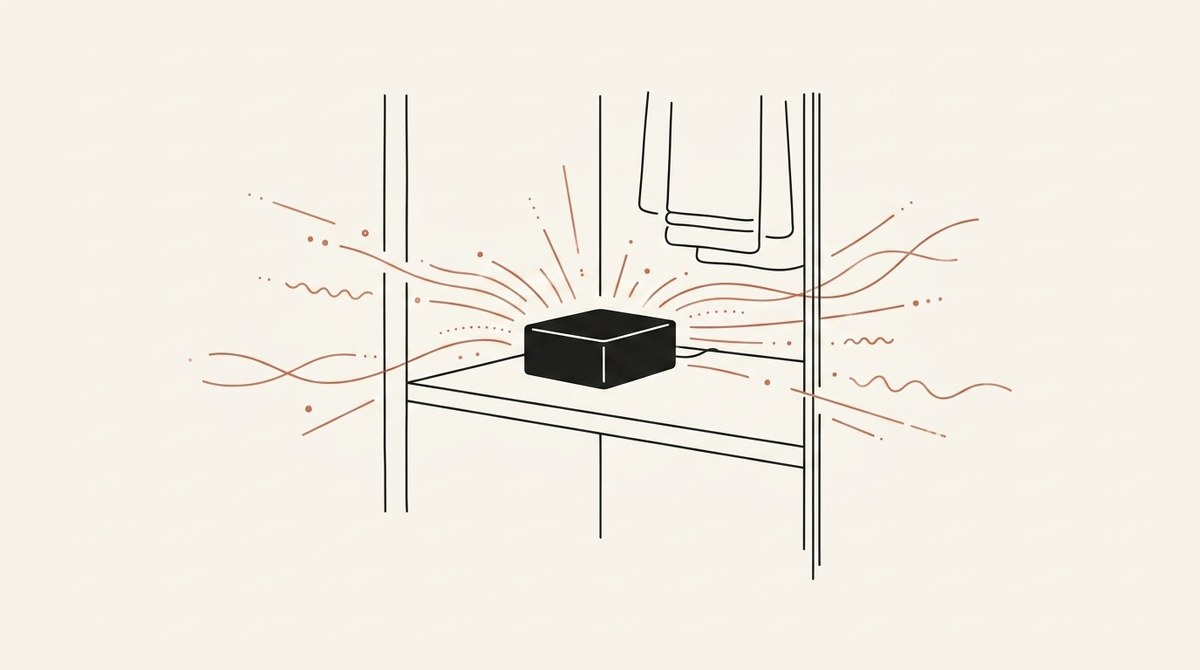
Eventually though, I think that flips. The little box in the closet is quarantined today because we don't trust it yet. But once it has run your calendar and your bills and your thermostat for a year without deleting anything, I don't know why it's still the second computer.
Think about what you actually do on your home computer. You check email, you look something up, you buy something, you pay a bill, you dig around for the receipt for the thing you have to return. Maybe you organize some photos. Every one of those is a chore, and every one of them is something you'd rather hand off to an agent than do yourself with a mouse and eleven browser tabs open.
Your phone survives this, obviously. Phones are cameras and maps and messages and a screen you already carry around, and none of that is going away. Your work computer survives too, because work is where you actually make things, and because your employer decides what sits on your desk anyway.
But the home personal computer, the one in the spare bedroom that nobody has sat down at in six months, or the laptop stacked underneath the magazines, I don't think that one makes it. It just becomes the local AI box. And the local AI box doesn't need a monitor.
The next wave is a device you just talk to
The industry is already moving towards voice-only AI life assistants, but of course they want to own the data. Sesame, the company started by Oculus co-founder Brendan Iribe, raised $250 million to build AI glasses you talk to all day. I've chatted with Sesame's Maya AI extensively and she is incredibly human-like. The glasses will be a breakthrough when you no longer need to use a computer to talk to your AI friend.
OpenAI paid something like $6.4 billion for io, Jony Ive's hardware company, and one of their execs told Axios that the first device will be ready to go as soon as this year, screenless and voice first. That is billions of dollars betting on a product category nobody has proven exists yet, but you can only assume the research is showing that the market wants this. ^Mockup of OpenAI's upcoming device, rumored to be screenless and voice first
They are all chasing the same idea. No screen, or barely one. You talk to it, it goes off and does the thing in the background, and it tells you when it's done. You're not sitting at a computer and you're not scrolling, you're out living your life while something else fills out the form.
The problem with all of them is the same, however. Every single AI device today and soon to be released is a cloud device. The glasses are talking to Sesame's servers, the pendant is talking to OpenAI's. So instead of disconnecting from the enshittified internet, now you're wearing it. And now it has access to not only your computer data but everything you see and hear and say throughout the day. No thank you.
What I hope will actually happen is households will have a device that you can talk to, but the server is a little box in your closet instead of a data center in Oregon. It will be the same level of convenience, a natural extension of your voice and your eyes and ears, except none of the data ever leaves the house.
Self-hosted AI is the antidote to the enshittification of the internet
We all know the internet is absolute junk now. Everyone hates social media. There are scams around every corner. We've all been told to disconnect or embrace digital minimalism for our health, but it's hard to do. Yes delete Facebook for sure, but the internet itself?
This is finally the time. A little mini PC, running a local LLM, can now take your place in the shitstorm of the internet, while you can enjoy life.
In the near future, I strongly believe every household will have a local AI machine. It may not be air gapped, maybe it'll still need access to the internet, but it will be there to help you rather than harvest your data. You will own it.
Your home AI server
^AMD recently released their own tiny AI supercomputer, the AI Halo
Your own local AI machine can run your household. You can talk to it, rather than to Alexa. You can use it to help you cook, plan your schedule, teach your kids something. You can connect it to Home Assistant. You can connect it to a doorbell camera, and it can detect people and notify you.
These are all things that households do now, but they require you to participate in the enshittified internet.
In fact, if you've heard the phrase the dead internet theory, it describes a turning point where the majority of the web is just bots generating content and interacting with other bots. In my opinion that is already a large part of social media. So if you can't beat it, why even participate in the dead internet at all? Send your best bot to the bot fight.
Niche interests
I can also imagine less connected households having a local AI machine. For example, a farmer might have a local machine that is completely disconnected from the internet. It can be used for all sorts of research, but also for building a custom app to track the business, planting, harvest, etc.
They might have sensors that collect data from the soil, or the air quality, or sound, and use that data to feed into a little dashboard that their local AI machine made for them. ^Agentic AI is already sweeping prairie farms - Source: Grainews
The best part about LLMs is you can feed it all sorts of information and it will do its best to analyze. You don't need to worry about finding the perfect app and learning to adapt to it, you don't need to worry about massaging data, and you certainly don't need to send a feature request to a developer. Natural language analysis is the key here, and your local AI agent is completely flexible. So households might have a variety of data gathering devices, and they can feed that into their local AI, with no need for interacting with any cloud based app or company.
So for both busybody tech-first households, as well as more disconnected and rural households, local AI computers will give everyone the ability to live your life with wisdom, analysis, organization, all the things that modern technology has provided. But you'll no longer need to open up a computer and login and participate in the dumb internet. Or connect your house to Amazon. Or give up your photos for Google to train on.
The companies don't want you to do this
Of course, no one wants you to disconnect from the internet. All the companies, all the software providers, social media platforms, they all need your attention, your data, and your money. ChatGPT is already pushing ads.
So if a little PC with an autonomous agent running a local open-sourced model can remove your attention, data, and money from these technology corporations, then what can they do about it?
To start, they can ensure you can't buy a local AI machine. They can do that by locking up all the GPU, CPU, memory, and hard drives for years, driving up the prices so that they become completely insano to the average person.
Then they can start to block your AI agent from autonomously visiting and using their websites and services.
They can increase the cost of electricity so that the numbers don't add up as easily. They'll show you it's cheaper to run a little computer that connects to the cloud, and uses their massive data centers, than if you run AI locally.
They'll even start spreading narratives that open source LLMs are dangerous.
Everything above is already happening, by the way. But I strongly believe that very soon, self-hosted AI will become unstoppable. And after that, people will stop logging in, they will stop opening up their personal computers. They will more and more rely on their local AI machines to do their internet bidding for them.
Self-hosted AI is still hard
Running a home lab, self-hosting apps, using open source software, these have all been ways for technical people to escape the enshittified internet and take control. The problem is there's a learning curve to the technical barrier of doing all this.
With local AI, the learning curve is immensely greater. Even if you were to follow a Docker recipe that someone has created for your exact mini PC, there's still a lot to learn.
But every day when I read the LocalLLaMA subreddit, or Nvidia forums, there are newbies who have joined and are jumping into the technical deep end. The difference now is they have Claude on their side. Ironically, using ChatGPT/Codex or Claude is the perfect assistant to getting a local AI system running.
So I think despite the cost, the learning curve, the sheer number of technical hurdles, there is a will and a huge army of people who are moving everyone forward toward a self-hosted AI that can be your internet proxy.
The community is a mix of highly educated researchers with business folk and enthusiasts and even gamers who already have the GPUs, but they learn and share with each other, their tips and recipes, how they've set up their agents. It gets easier, better, quicker, and cheaper over time.
Well maybe that last one is not true. If the big corporations continue to see local AI as a threat, they will find a way to keep people from owning their own hardware that can run it.
The local AI box
Right now there are many ways to get local AI working on a high powered computer. Most people are building a custom PC with an Nvidia GPU, and that's probably the best value for the money.
But I personally believe that small, AI-specific computers is where we're headed. The Nvidia DGX Spark and its variations from Dell, Lenovo, Asus, Acer, Gigabyte, HP, and MSI are only the beginning. I personally went with the Acer but they all share the same base hardware.
But now AMD has come out with their own Halo box, and Nvidia has more DGX-class desktops in the pipeline, and there's even a Kickstarter for a pocket sized local AI computer. Not to mention the Mac Mini and Mac Studio, which I would classify as ready-to-go local AI boxes, whenever they finally become available with the necessary RAM.
What a self-hosted AI agent needs
The point is that for local AI to take over as the central home or business unit, it has to be small, low powered, and ready to go out of the box. Right now we have the hardware, but the setup is still too difficult for most normies.
But that will change. There are already GitHub repos for setting up AMD Strix Halo machines with ready-to-go agentic and inference UIs. Soon enough, the DGX Spark will have a one click install. Eventually people will not have to know anything about Hugging Face, or MoE vs dense models, or any other AI term. They will just talk to the thing.
And in my opinion that will be the beginning of the end of the internet and the personal computer.
The Google leaked memo
One more thing. Back in 2023 a Google engineer named Luke Sernau wrote an internal memo that leaked, titled "We Have No Moat, And Neither Does OpenAI". His argument was that open source models were improving faster than anything Google or OpenAI could build behind closed doors, and that Google should work with that community rather than race it.
He was writing about open source, not local AI specifically. But three years on, those are the same thing. The models that run in your house are the open ones.
The subtext is that there is no stopping this. It starts with the enthusiasts, but it ends with the normies. And once that happens, I just don't see a reason why people will need to have a personal computer anymore, or app subscriptions, or even a monitor.
Agree/Disagree? Send me a note.