DGX Spark one year later: from dead on arrival to sold out
I started writing this article over a year ago, when the DGX Spark had been announced but not yet shipped. And then again when the first impressions came out and everyone denounced it as an utter flop. And then again when the tide started to turn this Spring.
And now there is full blown Spark fever, price hikes, discontinued or hard to find units, and maybe some regret from anyone who missed the boat.
For those people, I am sorry I couldn't make my case in time for you to get into a Spark unit or cluster at the original price. But eventually the prices will come down, or more likely alternative AI boxes will arrive, and hopefully this article will have convinced at least one person to FOMO into an AI box right away instead of believing the naysayers.
Why did I wait so long? Partly because I'm trying to make fewer AI predictions, and my early drafts were mostly predictions. And partly because so much kept happening in the Spark community that every month added something new to the story.
So with that out of the way, let me tell you why this little AI box is taking off, and why I think it represents the future of the local AI server.
The DGX Spark was dead on arrival (because of memory bandwidth)

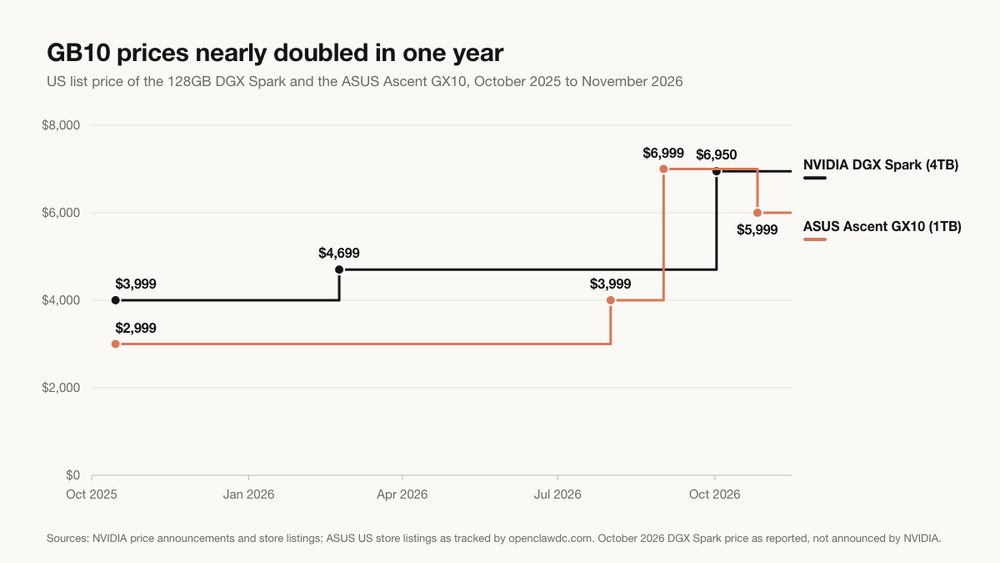
When the preorders opened, the DGX Spark Founders Edition was $3,999 with a 4TB drive, and the ASUS Ascent GX10 version was $2,999 with 1TB. I debated it for so many weeks, but did not hit the button.
According to Local AI experts, this thing was doomed. 1 PetaFlop meant nothing, the true metric was memory bandwidth. The Spark had only 273 GB/s, while a Mac Studio M3 Ultra had 819 GB/s. Discrete GPUs were even better. Everywhere you turned, whenever someone asked about the Spark, the answer was the bandwidth speed made it dead on arrival.
At the time, 128gb of VRAM could be had in much better options, like the Mac Studio, which also went up to 512gb for running truly large models. Macs also had a new native MLX framework that made for better inference than GGUF models (on Macs).
The Mac Studio became an AI computer by accident
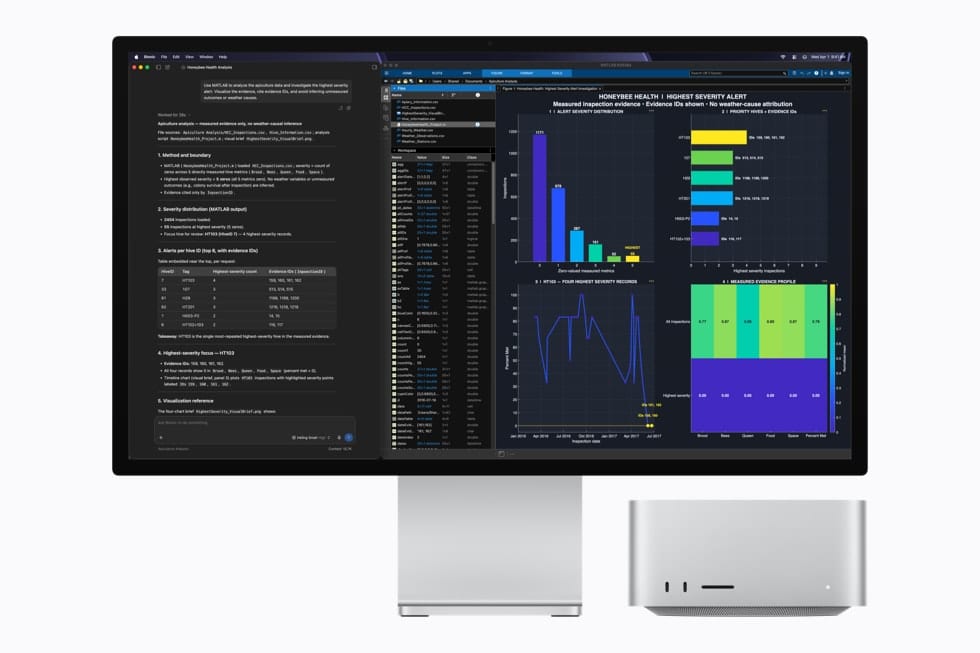
Believe it or not, I think Apple accidentally fell into the AI hardware game. I don't think when the Apple silicon chips came out, that anyone was thinking about integrated memory and local AI in consumer computers. The AI community discovered the beefy Mac Studio was actually one of the most economical ways to run local AI, with low power, less footprint, and leagues cheaper than traditional rack units with NVIDIA GPUs.
And so Apple stepped up with the MLX framework, and quietly started to watch their high paying user base go from creative professionals to AI researchers and enthusiasts. Sort of how Canon accidentally kicked off the whole DSLR and video revolution with the 5D Mark II, and then later pivoted their product strategy when many consumers started using these photo cameras for video (I wrote about that here).
As a lifelong Mac guy, I was sorta pleased to see Macs get begrudgingly recommended by people who have always hated Macs. The guys who live at Micro Center, run Linux distros, collect GPUs like they're status badges. The macOS was still garbage to them, but they couldn't deny the hardware.
Now with Mac hardware and with some easy to use local LLM software like LM Studio, it was looking like local AI was welcoming the normies. Like me. But what about the DGX Spark? Or other tabletop AI machines?
DGX Spark vs Mac Studio vs Strix Halo
A year ago there were also other options for a local AI server, like the Framework Desktop with its AMD Ryzen AI Max+ 395 "Strix Halo" chip, which was gaining a lot of attention and had long lead times. It came with either Linux or Windows, which meant it was more capable than only running an AI server.
Truthfully, I didn't want to play PC games, or use Windows, or get a multi-purpose computer. To me this was all about the AI home server. And between running MLX on a Mac, ROCm on an AMD, or CUDA on a DGX Spark, it made more sense to go with NVIDIA.
But the bandwidth evangelists convinced me the Spark was useless for inference. It would remain a niche tool for AI developers to prototype at the desk before deploying to data centers. That was the message everyone including NVIDIA repeated. On some GB10 product pages they would even say, 'This is a product for developers and some technical expertise is required.' Basically to keep us inference normies away.
So I decided to trade in my Mac Studio M2 Max 64gb for a Mac Studio M3 Ultra 512gb, the monster. I wanted to get the most capable computer I could get, something that would last a few years of AI experiments. It was going to be around $8k with my trade-in. A heap of money, much more than I could ever imagine paying for a computer. So each night I looked at the cart, waited, pondered my life choices, waited some more.
Eventually I waited too long.
Mac Studio prices went out of reach

The word had gotten out, and Mac Studios were running out of stock. Eventually the 512GB top of the line model was going for $25,000 or more used. Then the 256GB option became unavailable, then the 128GB option was gone too.
Memory pricing had gone through the roof. SSD prices had exploded. The frenzy of OpenClaw made Mac Minis the hottest trend for a couple months. People were starting to see that local AI hardware was taking off, at the same time the costs were already stratospheric.
Meanwhile frontier cloud models were becoming phenomenal, so why even waste your time with slow, expensive hardware running open source models that couldn't touch Claude?
I didn't have all the answers, but I decisively did not want to miss another opportunity to acquire local AI hardware before it became out of reach. I wanted to spend the next few years experimenting with AI, learning, building, training, automating. I had to buy something soon.

At the same time I was using my Claude Max subscription religiously, up to 50 million tokens a month, squeezing every inch out of it. It was relatively cheap compared to buying hardware, so the math didn't really add up to justify the local AI spend. It would take 3-4 years of running Claude Opus for hours on my nights and weekends before it would cost as much as one DGX Spark.
But I knew it wasn't the money, it was the learning opportunity. There's only one way to learn with AI and it's by using it, which in this case meant playing with local hardware. And so I started reading and watching every review of the Spark and all the other variations of the GB10 box.
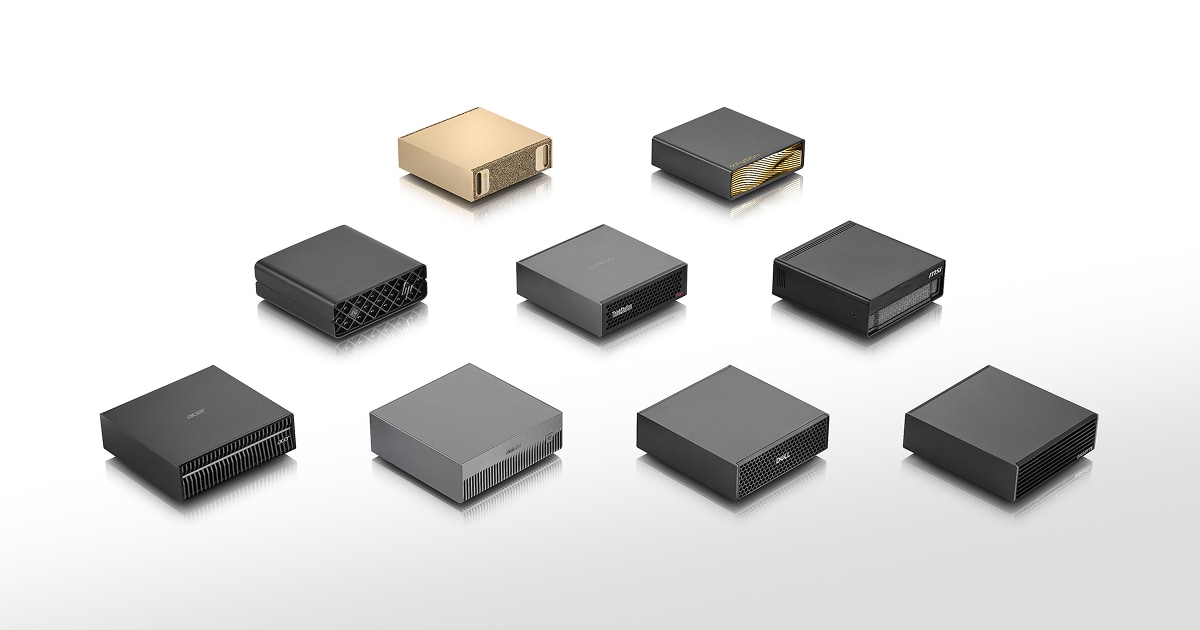
I checked prices daily on more than a dozen sites. I narrowed it down to the ASUS Ascent GX10, the Acer Veriton GN100, the MSI EdgeXpert, or the Gigabyte AI TOP ATOM. The Dell, Lenovo, and HP units were priced higher because they were going through traditional enterprise channels. I also ruled out the actual PNY NVIDIA DGX Spark, the Founder's Edition as it's called, because I didn't like how it looked. I also read it had poor cooling, but mostly I didn't like the look of it. Sorry.
Why I bought the Acer Veriton GN100
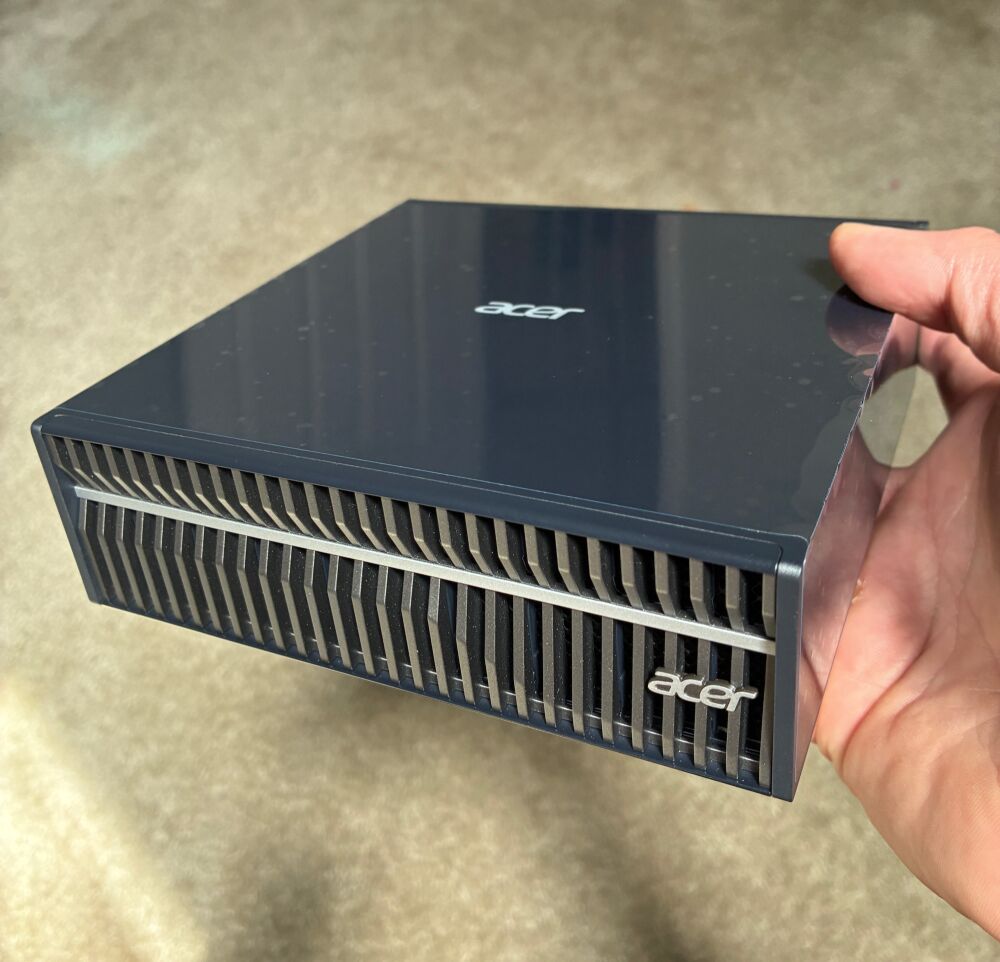
The Acer version of the GB10 box had very little attention at the time. A StorageReview article is the only real review of it, and it praises this unit's cooling over the Founders Edition, Dell, ASUS, and Gigabyte units. It came with a 4TB drive, and StorageReview listed it as a PCIe Gen5 SSD, which would mean faster model load times than Gen4. Retailer listings said Gen4. The specs and marketing language were murky at best.
I mention this because that's representative of the whole DGX Spark world around Spring 2026. It felt like a DOA product, just as the naysayers had predicted. A few early buyers justifying their own purchase, some great videos from Alex Ziskind that made it appealing as a hobbyist project (he clustered eight of them), some early rumblings on X.
But otherwise very little information, marketing, reviews, or discussion outside of small interest groups.
After I bought the GN100, I checked the specs and it was actually a Gen4 SSD inside. And a few weeks later there weren't many actually left in stock. It seemed like I was the only one out there who actually bought one of these. And in fact I bought two. Did I make a mistake? Was all of this a dead end?
The DGX Spark community steps up
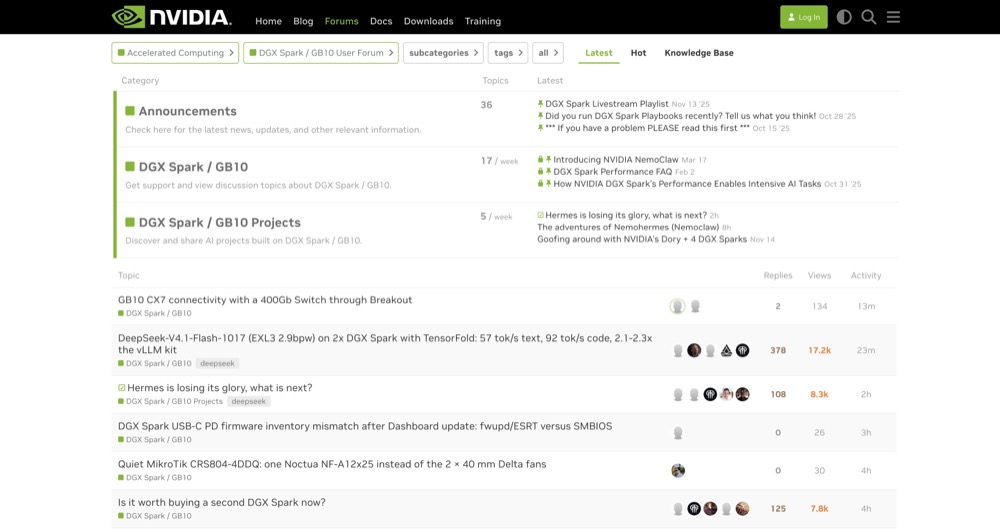
I joined the NVIDIA DGX Spark community forum anyway and began learning an entirely new language in earnest. This was a community of researchers and developers, precisely the original target audience for DGX Spark.
At first I was hugely intimidated. This community was sharing highly technical configurations for models and docker containers, tinkering with code deep inside the models.
But I recognized they shared the same interest as me for choosing the DGX Spark. They bought into the NVIDIA ecosystem, in a small tabletop format, and they wanted a local AI server and nothing else.
Instead of a beefed up Windows or Mac machine which you might also use for other work, or a power hungry gaming PC with a 5090 GPU which you could also use for gaming, the AI server is a dedicated machine for one purpose: running local LLMs and other AI work.
And to utilize the Spark to its maximum effect, you want to run an inference server like vLLM (or, these days, TensorFold) for concurrent uses rather than Ollama or llama.cpp or LM Studio for a single user. That also has a learning curve.
You don't have to understand the recipes
So at first glance, it seemed like I stumbled on a community where I didn't belong, full of AI developers and researchers. These are the kinds of messages they shared, YAML recipes that tune the LLM, cherry picked vLLM custom build scripts that optimize every little toggle to boost quality and speed of the model.
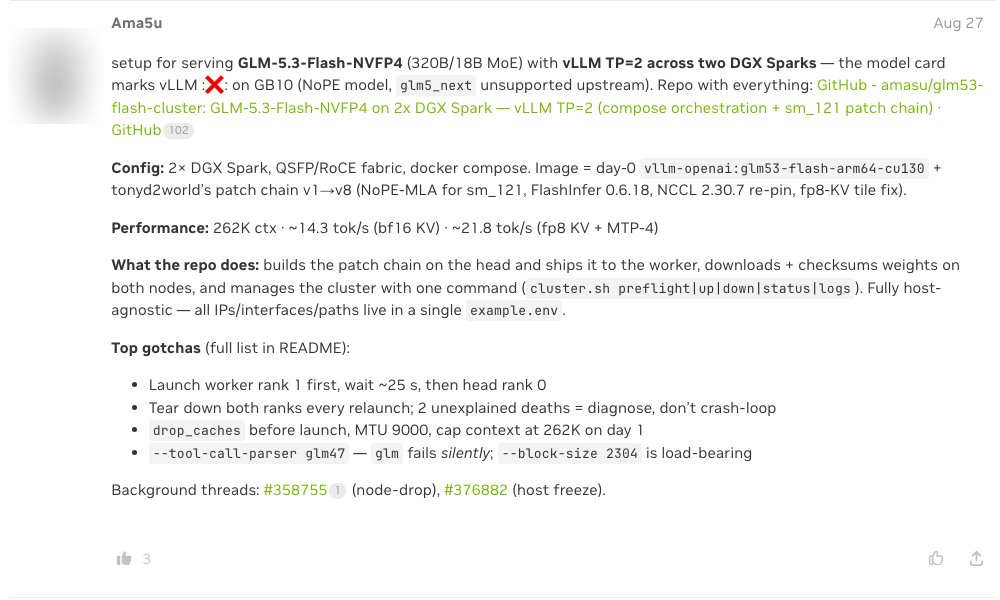
But then two things happened. One, I started to notice other non-researchers were participating on the forum, as well as extending the conversations out into X, YouTube, and Reddit. Normies were talking with researchers and machine learning professionals.
And two, I realized you don't have to understand all of it. Once I installed Claude Code on the Sparks, I could SSH into them from my Mac, and point Claude to any one of these forum points. "I want to install this model on my cluster, read through everyone's findings and then pull the recipe from the github repo, run benchmarks to ensure we're seeing the same prefill and decode speeds as others, and then let me know when it's ready for me to use."
Once others realized their agents could not only make sense of all of these technical recipes, but also contribute to the repos with additional tunings and optimizations, the whole Spark community 10x'd overnight.
So through the spring and summer, as open source models like GLM-5.1, DeepSeek V4, and Kimi K3 started to challenge frontier models, the Spark community rallied to get out recipes for 1, 2, 4, or even more clustered units. Everyone (or at least their agents) were figuring out how to do impossible things.
The hardware didn't change, but the software stack on the Sparks was going through major changes every day. No stone was left unturned.
Why the DGX Spark sold out
In Spring of this year, only a few people were on X recommending buying multiple Sparks before they potentially got too expensive. It seemed a little overly earnest, like they were justifying their own purchase decisions, but maybe I was too.
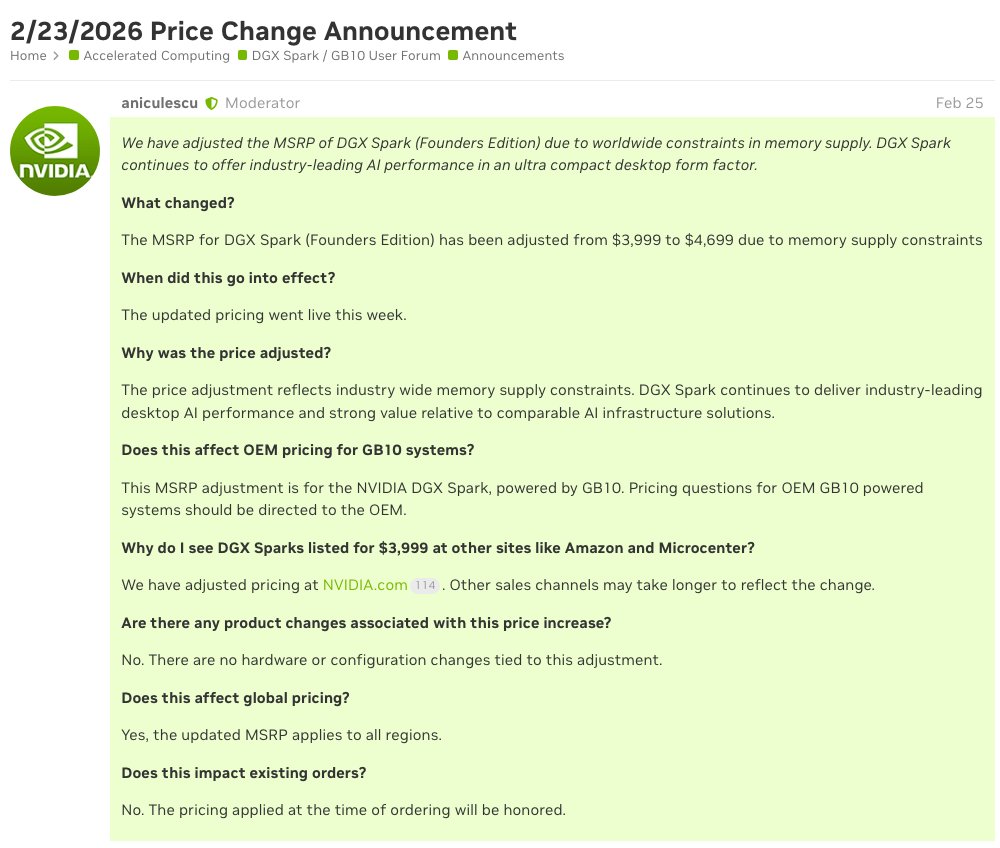
And NVIDIA had already given us a hint. In February they raised the Founders Edition from $3,999 to $4,699 because of the memory shortage. At the time it looked like a one time thing.
Many local AI enthusiasts were still waiting for Apple to announce the new Mac Studio M5 Ultra. They were expecting Apple to drop new 256gb and 512gb Studios at their original prices, which would make the Spark an over priced limited interest tool as everyone always suspected.
The Mac Studio M5 Ultra
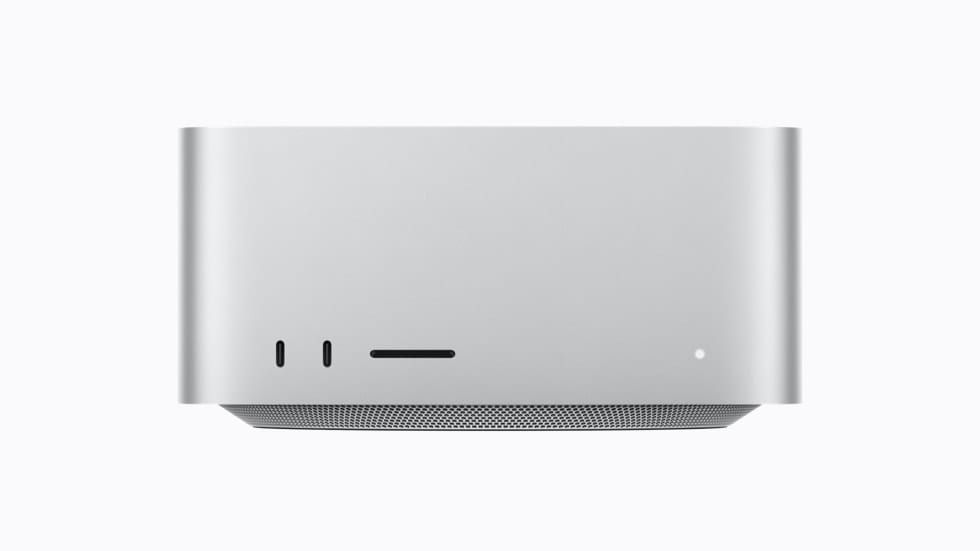
But this was always a pipe dream. When Apple finally announced the new Studios, they were about twice the price of the M3 Ultra models, with limited availability. The 512GB M5 Ultra costs $22,299, where the 512GB M3 Ultra launched at $9,499. Clustering over thunderbolt was a nice alternative to clustering Sparks over ConnectX, but still very expensive and with higher power draws.
The bandwidth argument came back, and of course the Mac Studio can be used as more than just an AI server. But for anyone paying attention, it was starting to look like maybe the Spark was the winner after all. Bandwidth decides how fast a model writes its answer, but prefill (reading your prompt, your codebase, your 50 page PDF) depends on raw compute, and that's where the Spark and CUDA are strong. For agentic coding, where every request sends a huge context, that matters a lot more than the benchmarks people were arguing about.
AMD Ryzen AI Halo
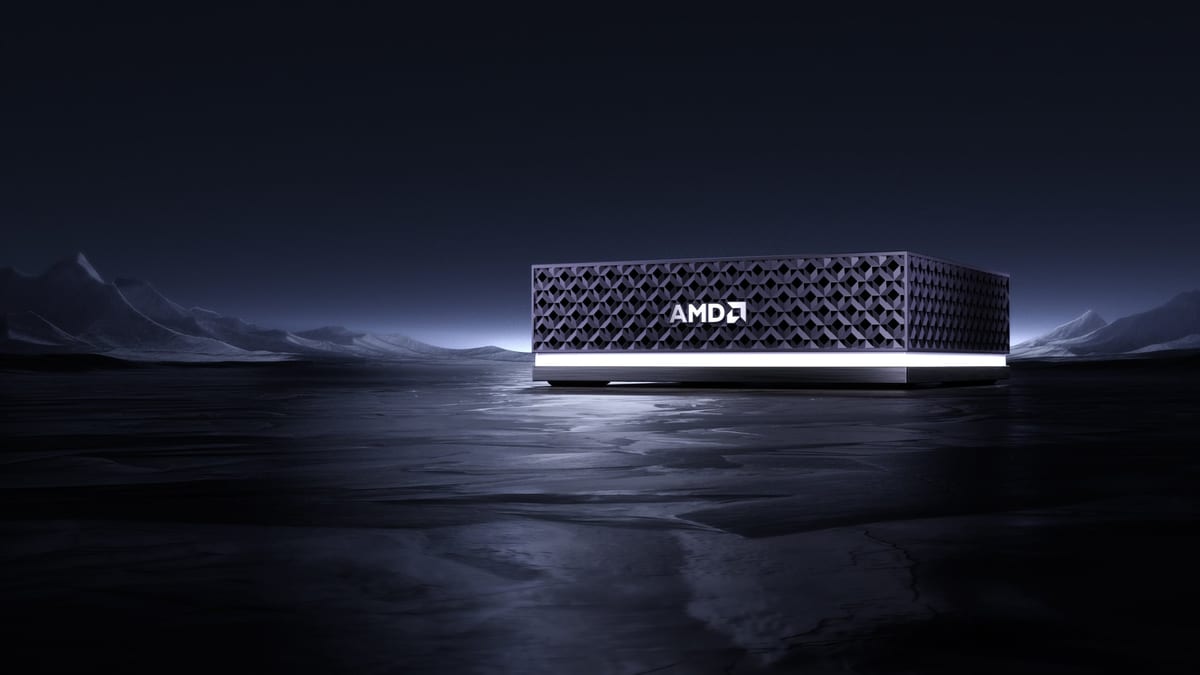
Then came another hopeful alternative, the AMD Ryzen AI Halo mini PC. But it was also $4k, did not have CUDA, and had only 10GbE networking, so no real way to cluster it like the Spark's 200Gb ConnectX-7 ports.
So while the hype for the AMD Halos died down pretty quickly, they also effectively solidified the AI mini PC as something the broad market might actually want. Not just AI developers and researchers.
RTX Spark
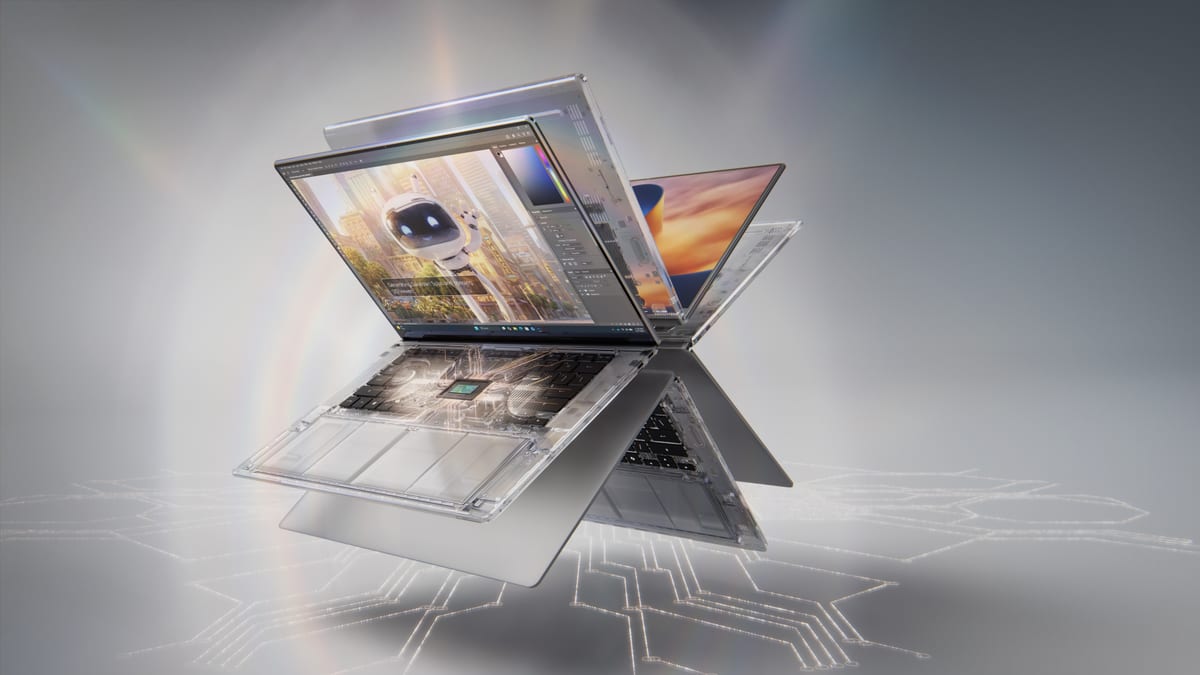
And then out of left field, NVIDIA announced the next generation of local AI compute, their RTX Spark ecosystem. Windows laptops and small desktops with the same silicon as the GB10, but notably with no clustering abilities, and only the top configuration gets 128GB.
While Local AI was finally reaching outside of a small niche community - with tons of YouTube channels like Linus Tech Tips discussing the future of supercharged laptops with local AI - for me and others who had already bet on the Spark, it seemed like finally the value of these machines were flipping from overpriced to underpriced.
And finally, there was one last hail mary that some were waiting for. As small developer shops and businesses were realizing the value of 4 and 8 cluster Sparks, they were still waiting for the DGX Station to be released before making a decision.
DGX Station
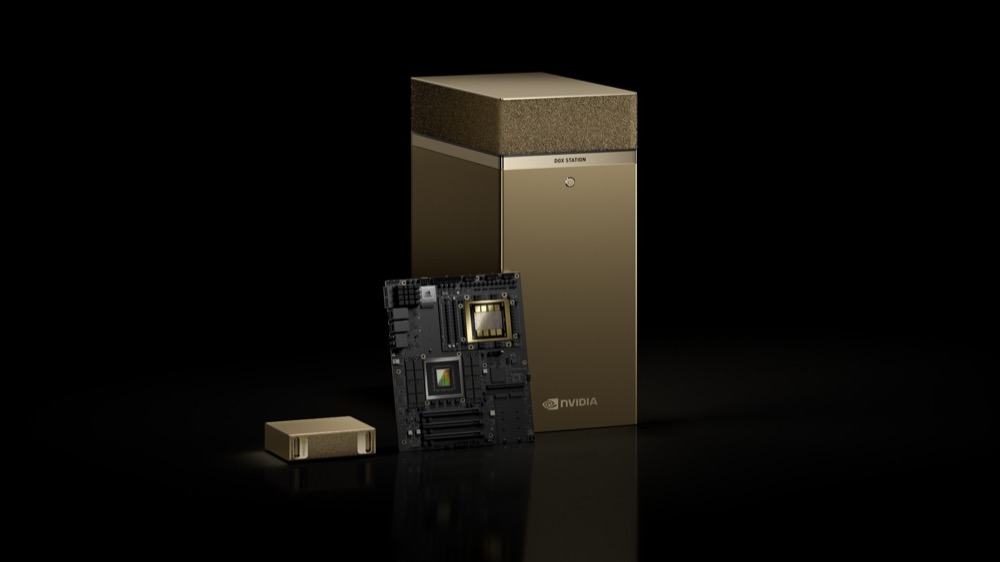
When it finally started to show up on reseller shops, the price was eye watering: over $100,000 for a single machine with about 784GB of memory. Compact and convenient, yes, but with a switch you could cluster 8 Sparks for $30-40k, and you'd have even more memory. And it would be a much more versatile system, with the ability to scale up or down units, replace faulty units if needed, build out custom cooling solutions in mini racks, split the power into multiple circuits, and so on.
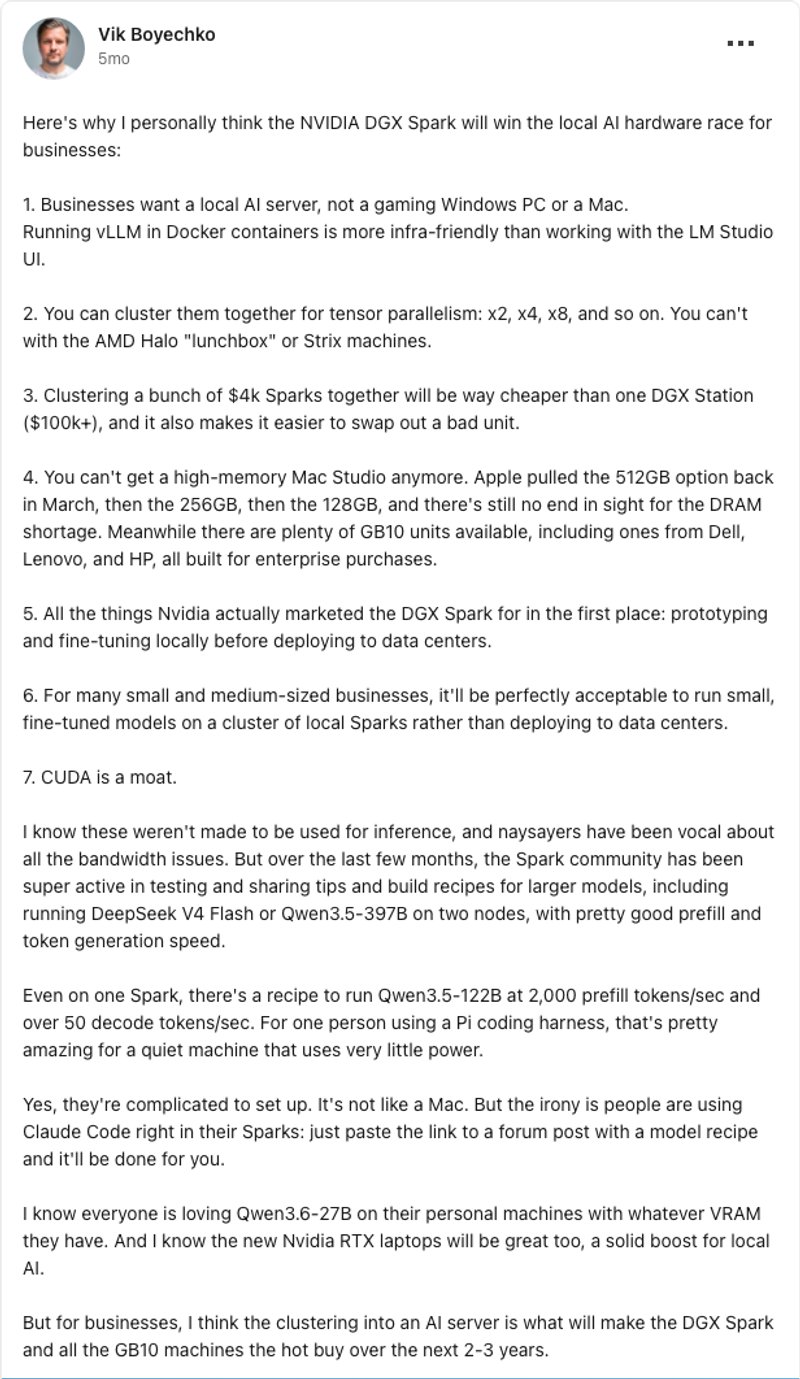
At this time I was pretty convinced the DGX Spark was going to win the local AI hardware race for at least the next couple years, and I wrote about it on my LinkedIn.
Is the DGX Spark worth it as a local AI server?
Now it's already been a couple months since I finished the last paragraph, and the Local AI world has once again changed considerably.
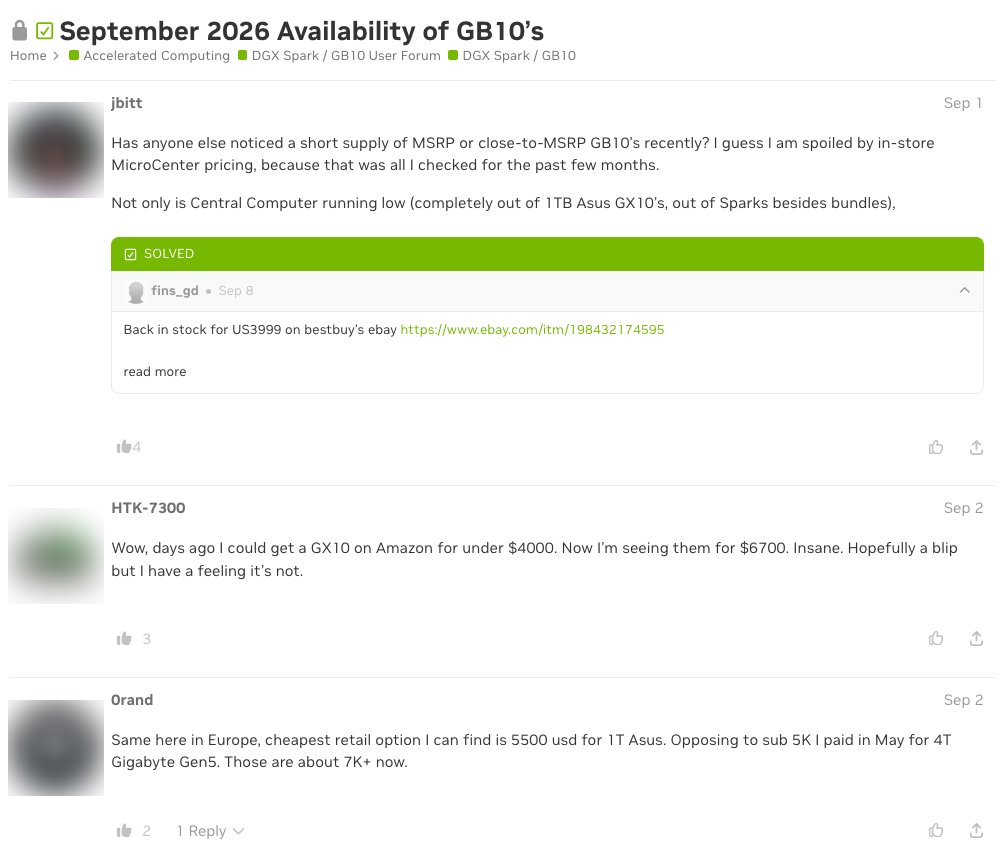
GB10 prices went through the roof. The ASUS Ascent GX10, the $2,999 box I almost bought at launch, really did double. ASUS listed it at $6,999 in September and $5,999 in October. Other GB10 machines followed. Forum members watched the 4TB Gigabyte go from under $5,000 in May to over $7,000. The NVIDIA DGX Spark itself was reported at $6,950 in October, which is almost double the $3,999 it launched at.
Then they went out of stock nationwide. Retailers ran out, and the forum filled up with people asking where to find one.
And then NVIDIA announced a 64GB version of the Spark for $4,999. Half the memory, for more than the 128GB Spark cost a year ago. What a blow to anyone waiting and hoping for a better Spark.
On the frontier lab side, the price of tokens and subscriptions has already gone up. OpenAI added a $500/month Pro plan and announced it would cut the Codex usage on the $200 plan in half (then took it back a month later, probably temporarily). Anthropic moved its enterprise plans to paying for tokens on top of the seat price. And suddenly local AI makes sense for not just small businesses but large corporations.
And then of course the last week of news, with the fall of Jensen Huang at NVIDIA, a company that has been a huge proponent of Local AI and even agreed to buy Hugging Face to support the open source AI community. Now there is fear in the streets, recommendations to download all the local models you can before they go away.
So now there is this fear-driven push for Local AI, to prevent being owned forever by the frontier labs, to keep paying for AI tokens at runaway prices. Companies like Uber and Tesla are already capping how many AI tokens each employee can use. Who knows where that goes next.
So are the Spark clusters the answer to all of this?
All I know is that the home and business AI server will continue to make sense, no matter how good the frontier models get, no matter the price of cloud tokens. For the past few months now, I've enjoyed unlimited AI for research projects, web apps, and experiments. It's been an amazing few months to learn all about how to own my own AI server and deploy it where I wanted, without worrying about the spend.
Most of all, knowing the models won't change up on me, or the compute or quants behind the models, that's been the biggest win. It's supremely hard to build an app on a shaky cloud AI model, which can change, go away, or quitely use much less intelligent quants from day to day. Owning your own local AI server fixes this, and I think it's where self-hosted AI is headed for everyone.
What I run on my DGX Spark cluster
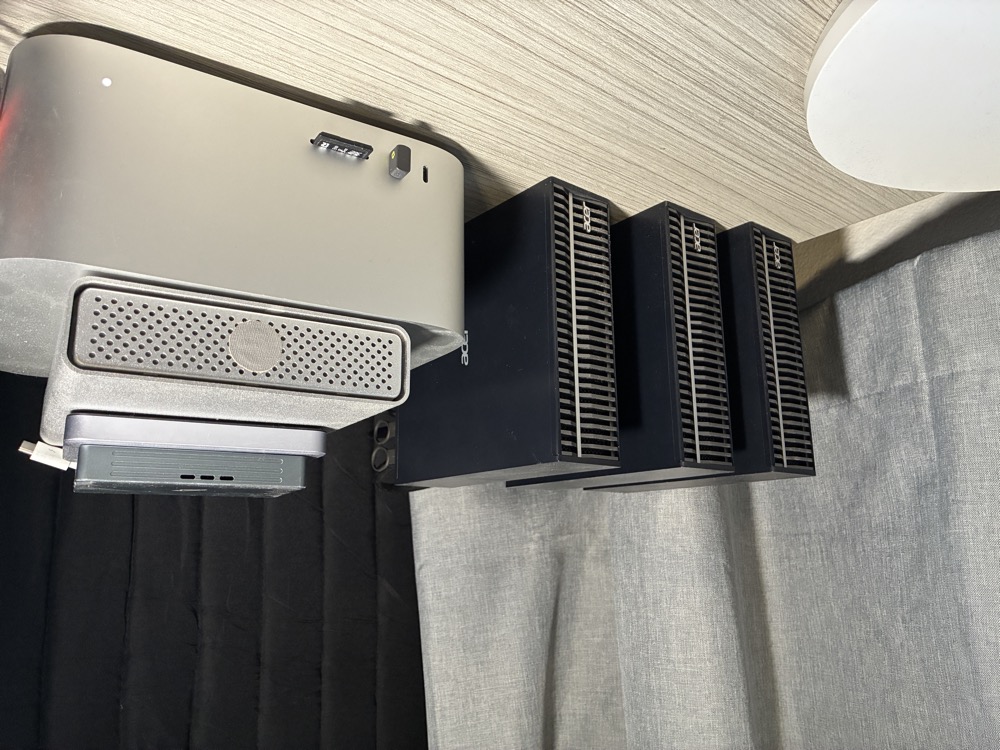
I've now added a third Acer GN100 which serves up local AI to friends and family with Open WebUI, it is a mini data center for local AI calls for some apps I have out there in the world, and I use it for experimenting with image and video gen, text to speech, decision models like Cloudflare Clef, and anything else I can think of.
Meanwhile my original cluster has gone through a variety of models until I landed on a GLM-5.3-Flash recipe from MiaAI Lab that is enough for me for years, honestly. It's not Opus 5.5, but maybe close to Opus 5? It doesn't matter, it's more than I need for coding and web development.
And it's only possible because the Spark community tinkered and figured out a way to run this big model on two Sparks with amazing prefill and decode speed.
My DGX Spark cluster benchmarks
While I was finishing this article, I had Claude run a quick benchmark against my two-Spark cluster from my Mac, over the home network. GLM-5.3-Flash is a 320B mixture of experts model with 18B active parameters. Mine is a 4-bit EXL3 version, split across both Sparks with TensorFold.
| Test | Result |
|---|---|
| Decode, one user | ~39 tokens/sec |
| Decode, four users at once | ~32 tokens/sec each, ~127 tokens/sec total |
| Prefill, 8,800 token prompt (cold) | ~1,570 tokens/sec, 5.6 seconds to first token |
| Same prompt again (cached) | 0.2 seconds to first token |
For comparison, the day-0 recipe in that forum post above was getting 14 to 22 tokens/sec on the same hardware in August. The speed almost doubled because the community (and their agents) kept working on the software, down to switching to a whole new inference engine.
Is 39 tokens/sec as fast as Claude? No. But it's faster than I can read and it never hits a usage limit. The prompt cache helps a lot with agentic coding too, since the agent sends the same big context over and over.
The downsides of the DGX Spark

I don't want to pretend it's all perfect. First, it takes time. I spent a lot of nights and weekends on this. Claude Code does the heavy lifting, but you still have to babysit it, and sometimes a recipe just doesn't work on your setup.
New models also break things. The Spark has an ARM CPU and a newer Blackwell GPU (sm_121), so a brand new model often needs a patched build of vLLM or whatever engine you use before it runs at all. The forum usually has a fix within a few days, but you're waiting on strangers.
It's also not frontier fast. Decode speed is capped by that 273 GB/s bandwidth, so big dense models crawl. Mixture of experts models with a small number of active parameters are the ones that run well.
And then there's the price. At $3,999 it was a steal in hindsight. At $6,000 to $7,000 it's a much harder decision.
Should you buy a DGX Spark now?

If a friend asked me today, I'd tell them any GB10 box will do. They all have the same chip, the same 128GB, and the same bandwidth. The differences are storage, cooling, warranty, and which one is actually in stock near MSRP.
Get 128GB if you can. You can cluster two 64GB units, but two 128GB units is what lets you run the big models. And plan for two. One Spark runs plenty of good models, but two Sparks and one ConnectX cable is where it gets really fun. A ring of three Sparks doesn't add much speed or capability, but four is very interesting. For me, a cluster of two is for my local needs, and a third one is for solo experiments.
Install a coding agent on day one. Claude Code, or whatever you use. Point it at the forum and the recipe repos and let it do the reading. Then on your local machine, install Pi, and use that as your lightweight coding interface. Then try Hermes for your own personal AI assistant.
Or wait. Prices will come down eventually, or more likely new AI boxes will show up. The RTX Spark machines are already here, they just can't cluster.
DGX Spark FAQ
What is the DGX Spark?
The DGX Spark is NVIDIA's small desktop AI computer. It uses the GB10 Grace Blackwell chip with 128GB of unified memory and runs NVIDIA's Linux based DGX OS. ASUS, Acer, Dell, Gigabyte, HP, Lenovo, and MSI sell their own versions with the same chip. Originally meant for AI developers and researchers to prototype apps intended for large-scale deployment, but most people (me included) use it as a local AI server for running local LLMs.
Is the DGX Spark's 273 GB/s memory bandwidth too slow?
It's slow for big dense local LLMs, because every generated token reads the whole model from memory. But mixture of experts (MoE) models only read a small part of the model for each token, so they run well. And prefill depends on compute, not bandwidth, so long prompts are fast.
DGX Spark vs Mac Studio: which is better for local AI?
The Mac Studio has more bandwidth and goes up to 512GB, so it writes answers faster on big models. The Spark has CUDA, much faster prefill, and 200Gb ConnectX-7 networking for clustering. If you only want an AI server, I'd pick the Spark.
Can you cluster two DGX Sparks?
Yes. Two Sparks connect directly with one QSFP cable between their ConnectX-7 ports (I use the Amphenol NJAAKK-N911). Three can connect in a ring, and four or more need a 200Gb switch (although there are now switch-less recipes that are getting popular). Then an inference engine like vLLM or TensorFold splits the model across the machines.