Side Projects as a Parent: Why I Only Make Small Bets
As a creative, productive person with ideas and ambitions, the world is your oyster until something else takes immediate priority over your work.
I know there are many examples of this, like a family member who needs your help, or a personal emergency, or a financial crisis.
For me, it was 11 years ago when I had my first son. I had been on a roller coaster in public media, with a mix of technology and filmmaking disruptions that placed me on a pedestal.
All of my ideas and efforts were bubbling up, I had training and speaking engagements with PBS stations nationwide, and locally my video storytelling work on Indie Alaska was unstoppable (I wrote more about those years here). I won a statewide 'Top 40 Under 40' award in Alaska. Everything was going swimmingly. I was 28.
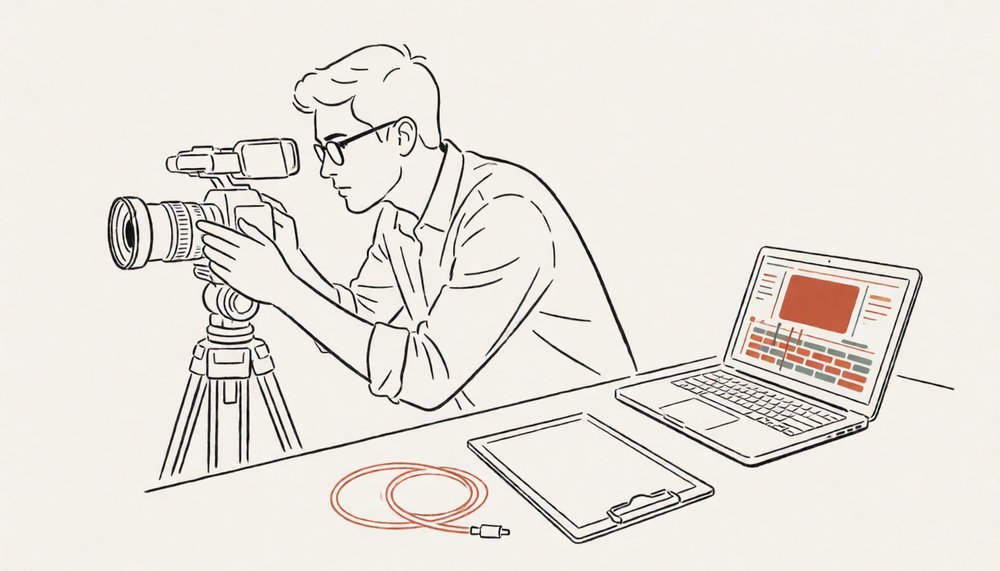
Then my best friend and partner in crime told me he was having a kid. He was in the labor room while I was presenting my case for a TV revolution to my organization. One half of the equation was already out the door. And then it was my turn.
We both resigned on the same day. The company hosted an amazing going away party for us. We formed a new company, and within days we had a huge PBS contract for nationwide storytelling training, documentaries, digital tools, marketing guidance, and so on.
We spent the next two years executing the contract, while passionately generating a ton of crazy good ideas in hotel rooms and on plane rides. Every one of our ideas was going to shake up PBS and the documentary video industry, or at least make some really good content along the way.
Choosing my kids over my ideas
But the reality hit quickly. As a dad, you only have so much attention and energy. I read Viktor Frankl's Man's Search for Meaning and immediately decided my life purpose was my children and not my work. From that point on, ideas stayed as ideas.
We tried to gas up a lot of different ideas after that two-year nationwide blitz. All of them were good. But being a good dad always took first priority.
And so one by one, I learned the art of letting go. Of all my good ideas. Of all my desires to build things. Of the time I wanted to spend on learning, producing, engaging, being a productive adult in the world.
I would usually try really hard to make something happen, realize I didn't have the time or uninterrupted attention to do it, storm and complain about it, and then eventually give it up. That happened many times over.
Does this sound familiar to you, as a parent?
When the kids got older, I got my evenings back
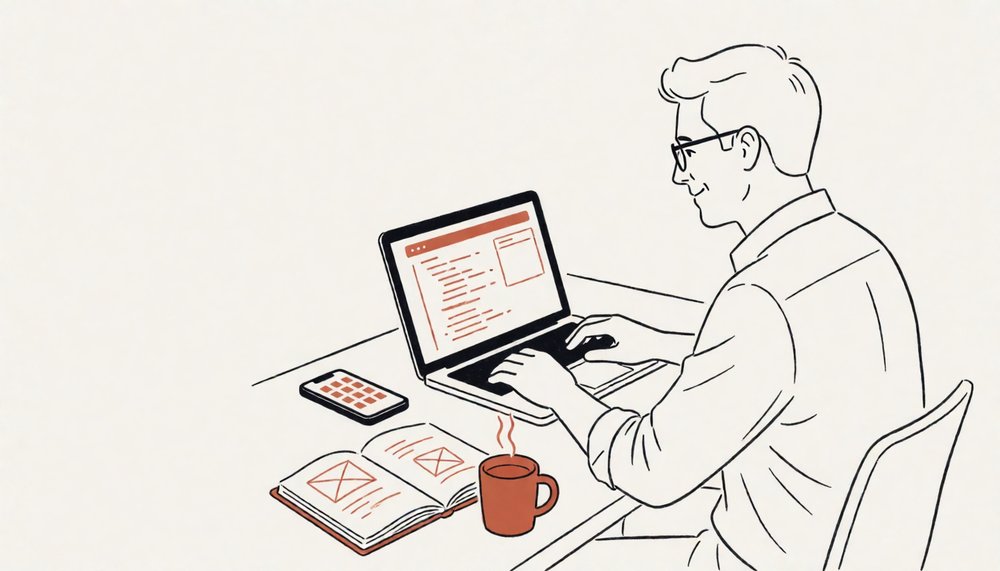
A few years ago the tide started to turn. My kids were old enough that I didn't need to hover over them every second, and I didn't need to manage their every activity. I didn't even need to feed them. They could get their own snacks.
I still had to work during the day, which in the tech world is exhausting and mentally draining, but all of a sudden I had a couple hours at night to actually do stuff.
Video production was out of the question at this point, because that still required travel and full days of work (although now Claude can make videos too). But building tools and apps, websites, writing blogs, that was all on the table.
At this point I already had years of working with web and app development, with a mix of diving into technical details while depending on actual developers to implement the hard stuff.
With the mental space now to dive deeper, I started swimming in codebases, frameworks, deployments, and creating things from scratch. I enrolled in live and async courses (and I still think learning to code matters) and dreamed of creating the things I've always wanted to build.
Of course reality hit. A couple hours a night, and a few more during the weekends, is still not enough to build anything substantial unless I committed to long-term projects. And I didn't really want to do that at this point. I wanted to take many small bets, experiment, have fun, and see what sticks.
Then ChatGPT came out
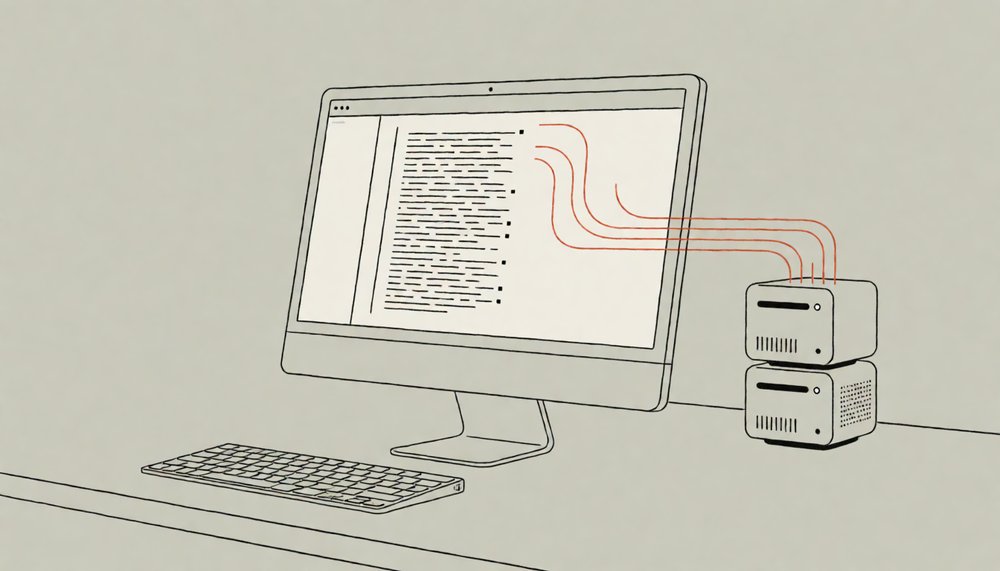
Just my luck, ChatGPT came out in November 2022, and I instantly saw that software development would never be the same again. For professionals, it would be a couple years before we started seeing the effects hit dramatically. But for creative side pursuits, the advantages were immediate.
So from that moment, I've been running. No, flying. I've been learning and following along with all the AI trends, but more importantly I've been building. Websites, web apps, desktop apps, niche device apps, agents, automations, workflows.
First it was with ChatGPT, then when Claude came out I moved my subscription. Then when Claude Code came out I moved entirely to the terminal. Then the Claude desktop app and Cowork, then back to Claude Code. And lately I'm in the terminal with both Claude Code and the Pi harness, running an open-weight LLM on a local cluster of DGX Sparks.
But here we are, and once again I'm hitting a wall as a parent, a wall that maybe single, young, childless builders aren't facing.
Small bets: what I build in a few hours a night
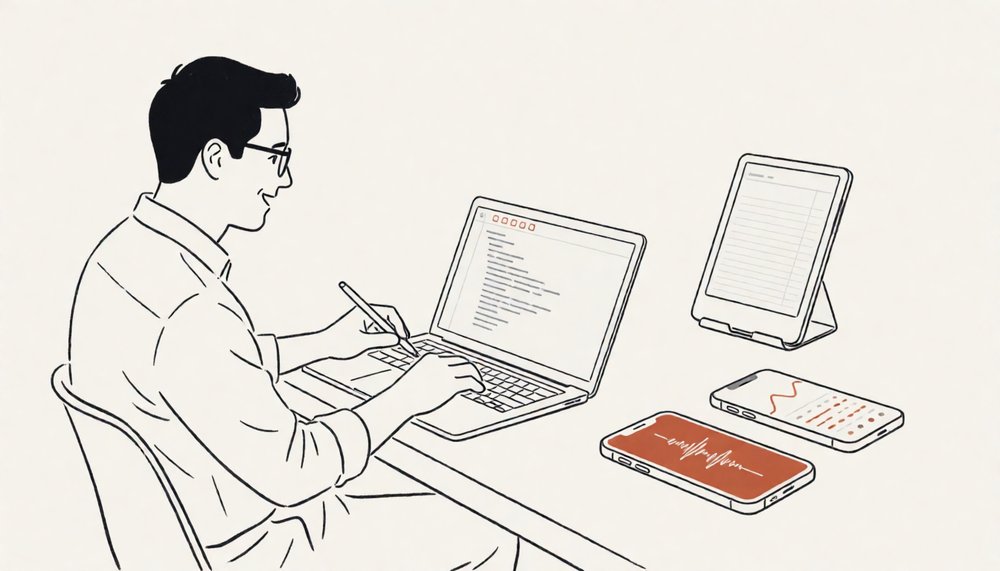
I've shipped multiple projects now, each with independent customer bases, websites, app cycles, their own ecosystems. There's MainPoint, a desktop app to get a one-sentence summary of any on-screen text, for cutting down time reading slop. SpotBar, a menu bar app for metals prices. MoveWriter, which adds Bluetooth keyboard support to the reMarkable Move. Planneriffic for reMarkable planners, and Laesi an app I helped my friend and former colleague build for language learning.
There's also a number of websites, small tools, and other projects, some that I haven't written about yet. Tiny seeds that maybe one day will grow into something bigger. One web tool gets 15-20k visitors a month. Others just a trickle.
I've purposefully kept each project small and maintainable. The time constraint has provided a limitation that has been good, I think, on what kinds of projects I am willing to put out in the world, knowing that I don't have the time to market, grow, and support much beyond what I can handle. Even deploying AI agents to do some of that work is brain drain.
So that means I only have small bets, little projects with small customer or user bases. And with my free time, I continue on that path. Dozens of Terminal (now Warp) tabs open exploring other mini ideas, deploying small productivity boosts or niche solutions.
The founders who have all the hours
But am I missing out on the big bets? The 20-something founders who are using the same AI tools but putting in 16-hour days on one idea, chasing the big leaps with funding, taking risks with ad spend, going all in.
Sometimes those risks fail, way more often now that any idea can quickly be copied by other builders. Or worse, copied by OpenAI or Anthropic, squashing those young founders' dreams overnight.
But they move on, and eventually something hits. Or they get hired at a 9-to-5, start a family, have kids, and begin to slowly let go of their ideas one by one, until they give in to the reality that building products is no longer the thing that gets them up in the morning.
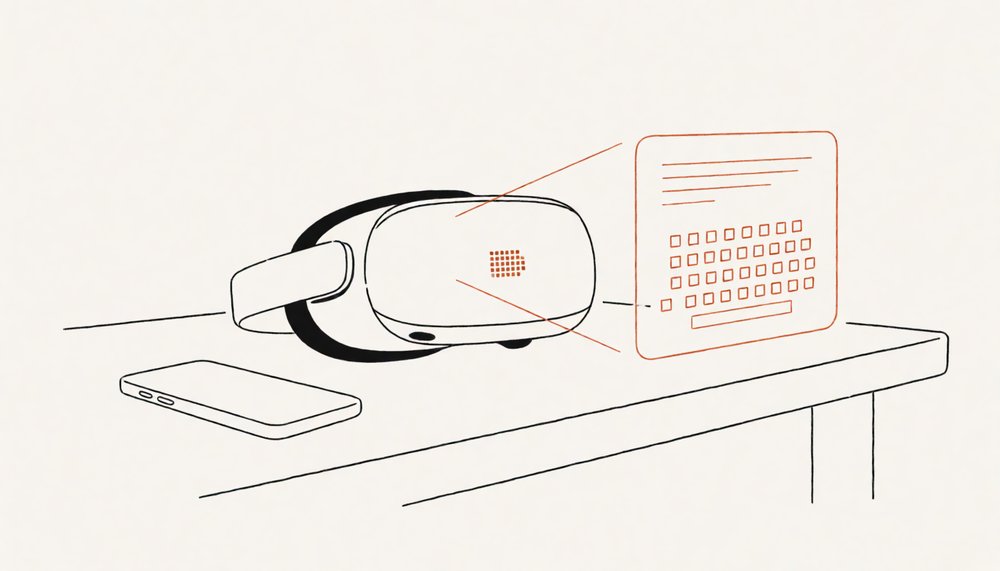
And then years later, they'll sit down in their basement/mini-studio, put on a pair of VR glasses, swipe to open their virtual typewriter, and begin to move their fingers in space. The sound of faux keys as they pour out some idea that's been stirring for months or years.
They now have the brain space to build again. Little things, lots of them, some even good. A few hours here and there is a miracle. But how can they compete with the builders who have all the hours?
Passing on the drive to create
A creative person is never satisfied with the amount of time and space they have to create. That's a good thing, I think.
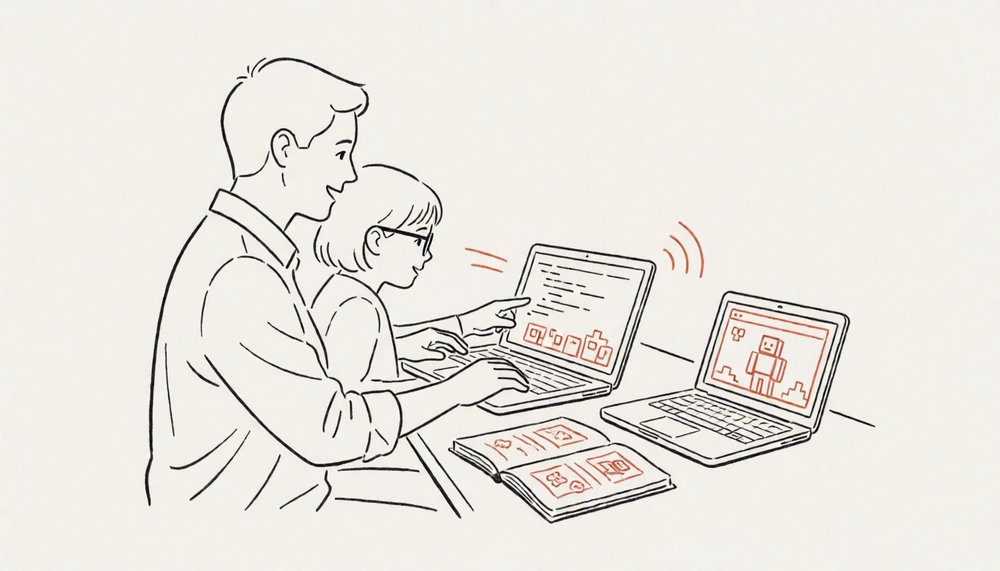
In the meantime I'll keep taking advantage of the opportunities I have to learn, build, and then teach others. Lately it's been teaching my older son how to use Claude Code to make games. So now I've passed along the lifelong drive to create.
And in a way, giving someone the agency to create their own side projects for life, no matter how far they take it, is ultimately more gratifying than pursuing my own ideas. I hope my kids inherit the passion for building, creating, sharing. Even if they're small bets.